Why Project Zero comes first.
Project Zero starts with a $25,000 founder and PÛR commitment. Public fundraising will open only after sites and the remaining funding need are assessed. We will publish the starting condition, selected repairs, costs, delivery, testing, and follow-up.
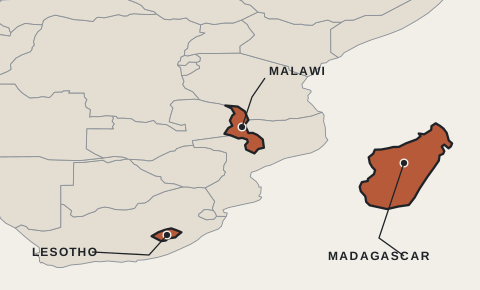
We are assessing opportunities in Malawi, Lesotho, and Madagascar. No country, site, or delivery partner is selected; no completed results are claimed. Our specialty is water-system restoration where physical access makes the work harder.
What we are looking for.
Failed, unreliable, or unsafe existing community water systems where a practical intervention can restore dependable service. We will consider the strongest combination of suitable repairs rather than force the whole initiative into one system.
- The source of the failure can be understood and the proposed fix explained.
- The system serves a documented community need, with distinct users counted using a defensible method.
- Getting people, parts, or tools to the site presents a meaningful physical access challenge; security risk alone does not qualify.
- Permissions, safe access, local delivery, and a workable follow-up arrangement can be established.
- Parts, skills, access, and testing can be planned realistically.
- Maintenance and follow-up arrangements can be strengthened through the work.
Restoration comes first. New infrastructure is a limited exception when rehabilitation cannot provide a sound solution. We compare physical remoteness and distinct people reliably served together, alongside cost and durability. Film potential never outweighs the water outcome.
How the field work will happen.
Assessment will determine the scope before repair commitments are made. FIELDWATER will coordinate practical work and hire specialist support where machinery, custom tools, or tasks beyond available capabilities are required.
The schedule will follow the work. Parts availability, access, specialist tasks, and testing may make a shorter visit, a longer visit, or separate visits appropriate. Dates and contractors are not confirmed.

Assess
Diagnose the system and verify the need.

Reach
Plan people, parts, tools, and safe access.

Restore
Match the repair to the failure.

Verify
Record costs, water checks, and follow-up.
A committed start. A goal that can grow.
The founder and PÛR have committed a $25,000 field-work minimum toward Project Zero's current $50,000 total goal. This is a funding commitment, not a spending quota. Further assessed work may extend the initiative if the goal is met and delivery capacity allows. Founder travel and lodging are accounted for separately.
| Budget category | Current status |
|---|---|
| Assessment and technical support | To be scoped |
| Repair parts, equipment and transport | Quotes pending site selection |
| Contracted specialist work | Based on selected repairs |
| Testing, handover and follow-up | Plan to be established per system |
| Committed field-work minimum | $25,000 |
Each repair will have its own cost record. Any partner-funded expansion will be added only after assessment supports a larger responsible scope.
What added funding could make possible.
The funding levels describe capacity to assess and deliver sound work, not a promised number of people served. Any reach estimate must follow site diagnosis and a defensible count of distinct users.
Site assessment
Founder and PÛR field-work commitment.
Assessed scope
Current total initiative goal, including the commitment.
Actual reach may be lower or higher. System condition, geography, transport, water safety, technical complexity, specialist labor, and long-term reliability will take priority over hitting a headline number.
Explore a founding partnershipWhat the project record will show.
As work progresses, this page will retain the original plan alongside actual delivery and results.
- System condition and the evidence behind the need.
- Selected scope, estimates, partner commitments, and approved changes.
- Work completed, photographs, and field notes.
- Planned versus actual spending.
- Functionality and water-testing evidence, with dates and limitations.
- People reached, the basis for that estimate, and follow-up findings.
Water flowing alone will not be presented as proof that it is safe to drink. Unresolved issues and setbacks belong in the record too.
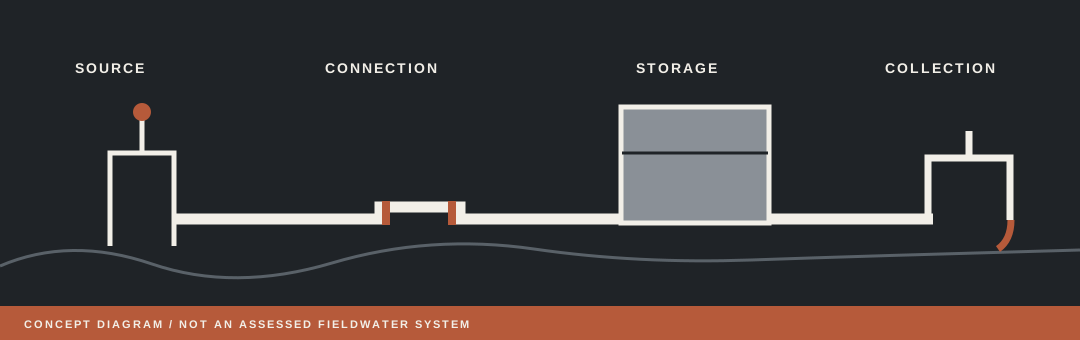
Concept diagram only. The actual system and checks will be documented after site assessment.
Current record.
Committed base increased. Site selection still ahead.
The $25,000 committed field-work minimum is included in the $50,000 current total goal. Reach will be estimated only after candidate systems are assessed. Further assessed work may extend the initiative if the current goal is met. Site assessments, final repair mix, quotes, delivery dates, and verification arrangements remain outstanding.
There are no completed repairs, verified beneficiary counts, or water-test results to publish yet.